How to License a Patent in Canada and Generate Revenue
November 5th, 2026
Obtaining a patent can protect an invention, but the patent does not automatically generate income. To create commercial value, the owner must manufacture and sell the product, assign the patent, or authorize another business to use the invention. That authorization generally takes the form of a patent license.
Licensing may suit an inventor who does not want to manage manufacturing, distribution, marketing, and customer support alone. It can also help a company reach several markets through partners that already have the required resources and industry relationships.
A valuable agreement depends on more than the royalty rate. The patent’s ownership and status must be confirmed, the commercial opportunity assessed, the right partner selected, and the licensed rights defined precisely. This guide explains the main issues to consider when licensing a patent in Canada.
Key Points About Licensing a Patent in Canada
- A license authorizes another party to exercise defined patent rights under the agreement without necessarily transferring ownership of the patent.
- Revenue may include an upfront payment, royalties on sales, milestone payments, or guaranteed minimums. The value depends on the patent, market, and obligations assumed by each party.
What Is a Patent License?
A patent license is an agreement in which the patent owner, known as the licensor, authorizes another party, the licensee, to use the invention under defined conditions. The permission may cover activities such as manufacturing, using, or selling the patented product in Canada.
The licensor generally retains ownership of the patent. The rights can be broad or limited to a particular territory, product category, industry, customer group, or period.
A Canadian patent creates rights in Canada. A strategy targeting the United States, Europe, or other markets must account for patent applications and granted patents in those jurisdictions, along with any know-how, industrial designs, trademarks, and other assets included in the agreement.
What Should You Verify Before Looking for a Licensee?
Preparation affects the credibility of the opportunity and the quality of the offers received. Before approaching companies, verify the following:
- Ownership: Confirm who owns the patent and whether an employer, business partner, investor, or co-inventor has rights.
- Patent status: Check the protected jurisdictions, pending applications, maintenance fees, and remaining term.
- Claim scope: Understand what the patent claims actually protect, not only what the product does.
- Commercial evidence: Gather test results, market information, estimated costs, user feedback, and the prototype’s development status.
- Complementary assets: Identify the confidential know-how, drawings, trademarks, software, or data needed to commercialize the invention.
The remaining patent term can affect how much a partner is willing to invest. The article on patent expiration in Canada explains what happens to exclusive rights when protection ends.
Exclusive or Non-Exclusive Patent License: Which Is Better?
Patent licenses can be adapted to a commercial strategy. The two most common forms are exclusive and non-exclusive licenses.
| License type | How it generally works | Important terms to negotiate |
|---|---|---|
| Exclusive | One licensee receives the defined rights in the covered territory or field. Depending on the wording, the licensor may also give up the right to use those rights. | Minimum sales, launch milestones, required investment, return of rights, and precise limits on exclusivity |
| Non-exclusive | The licensor may use the invention and grant comparable rights to multiple licensees. | Reserved sectors, excluded competitors, consistent terms, and management of several partners |
Rights can also be divided. One company might receive exclusivity for medical applications in Canada, while another uses the same technology in an industrial sector or another country. Exclusivity should not be broader than the partner’s ability and commitment to commercialize the invention.
How Is Patent-Licensing Revenue Structured?
There is no universal royalty rate. Compensation depends on factors such as patent strength, technological risk, development stage, product margin, market size, exclusivity, and the investment required from the licensee.
An agreement may combine several payment methods:
- Upfront fee: A payment made when the agreement is signed.
- Running royalties: A percentage of net sales, an amount per unit, or another formula linked to commercial use.
- Milestone payments: Payments triggered by an approval, product launch, sales target, or another defined event.
- Guaranteed annual minimum: A minimum payment intended to prevent a partner from holding rights without actively commercializing the invention.
- Cost reimbursement: Payment of specified patent, testing, regulatory, or development expenses.
The definition of net sales deserves careful attention. The contract should address permitted deductions, returns, discounts, sales to related companies, bundled products, and transactions in different currencies. Reporting obligations and audit rights can help the licensor verify the amounts reported.
How Do You Find a Company Interested in Your Patent?
The best licensee is not always the largest or best-known company. Look for a partner whose products, distribution channels, technical capabilities, and markets fit the invention.
Begin with companies that make complementary products, sell to the same customers, or are trying to solve the problem your invention addresses. Trade shows, industry associations, innovation networks, incubators, and business databases can support the search.
Prepare a short presentation focused on the problem, commercial advantage, protection status, and next step. Invention Quebec’s guide to presenting an invention clearly can help you decide what to communicate during the first contact.
Do You Need a Confidentiality Agreement?
A published patent application or granted patent already makes some information available to the public. A confidentiality agreement may still be valuable when the discussion involves unpublished know-how, test results, commercial data, manufacturing plans, or confidential improvements.
Do not automatically provide every technical detail during the first contact. Begin with a non-confidential presentation, then determine with a professional which information should be protected before making a more detailed disclosure.
If a patent application has not yet been filed, caution is especially important. Public disclosure can limit or eliminate patent opportunities in some countries.
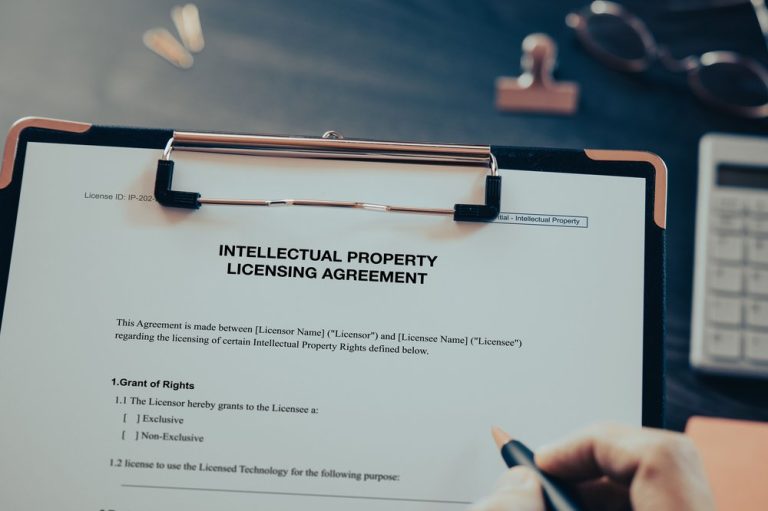
What Should a Patent-Licensing Agreement Cover?
The drafting will depend on the product, industry, and negotiating position of the parties. A patent license should generally address:
- The patents, applications, claims, territories, and fields of use covered
- Whether the rights are exclusive or non-exclusive
- The agreement’s term and its relationship to patent expiration
- Upfront payments, royalties, minimums, milestones, reporting, and audit rights
- Development targets, launch deadlines, and performance requirements
- Sublicensing rights and the sharing of sublicensing revenue
- Ownership and use of improvements, new inventions, and know-how
- Responsibility for patent prosecution, maintenance, and costs
- Monitoring of infringement and control of enforcement proceedings
- Representations, warranties, indemnities, insurance, and limits of liability
- Termination rights, cure periods, and treatment of remaining inventory
- Governing law, dispute resolution, and post-termination obligations
When a product’s appearance is also protected, the agreement may need to cover additional rights. Review the guide to industrial design protection in Canada to understand the distinction between a product’s appearance and its patented function.
How Should You Evaluate a Licensing Offer?
A high royalty rate does not automatically create the best agreement. Evaluate the entire offer, including the partner’s ability to launch the product, promised investment, guaranteed minimums, scope of exclusivity, and mechanisms for recovering the rights if the project does not progress.
Review the partner’s financial capacity, regulatory experience, sales channels, reputation, and competing products. A company may seek a license to commercialize the invention, but it may also want to prevent a competitor from obtaining the rights. Performance and diligence obligations help reduce that risk.
Patent ownership also does not automatically provide freedom to operate. The commercial product may depend on technology covered by other patents, so a separate analysis may be needed before launch.
Patent License or Assignment: What Is the Difference?
A license authorizes use of defined rights while generally leaving ownership with the patent holder. It may generate recurring revenue, but it requires ongoing monitoring of sales, payments, and contractual obligations.
An assignment transfers ownership of all or part of the patent. It may provide a more immediate payment, but the assignor gives up the transferred rights and may not benefit from the product’s future growth.
The right choice depends on cash needs, the ability to administer a license, acceptable risk, and expectations for future value. For an inventor who has completed a prototype, the guide to the strategic steps after building a prototype can place this decision within a broader commercialization plan.
Does a Patent License Need to Be Registered With CIPO?
Registration of a document must be distinguished from recording a transfer of ownership. The Canadian Intellectual Property Office allows a person to request registration of a document relating to a patent or patent application. A transfer that changes ownership follows separate recordal rules under the Patent Act and Patent Rules.
Whether a particular license should be registered, what should be filed, and the possible legal effects depend on the structure of the transaction. Documents submitted to CIPO may also become publicly accessible, so confidential business terms should be considered before a complete agreement is provided. Seek advice from a patent agent or intellectual property lawyer.
What Are the Steps to License a Patent in Canada?
A structured process may follow these steps:
- Confirm ownership, status, and scope of the patent.
- Define the markets, territories, and uses you intend to license.
- Prepare a commercial presentation and supporting evidence.
- Identify and qualify companies capable of commercializing the invention.
- Protect confidential information before detailed disclosure.
- Negotiate a term sheet or the main business terms.
- Have the license agreement prepared or reviewed by qualified professionals.
- Establish systems for monitoring sales, payments, deadlines, and performance obligations.
These steps do not guarantee that a company will accept the license, but they strengthen the process and reduce the risk of granting overly broad rights too early.
Prepare Your Patent Strategy With Invention Quebec
Invention Quebec supports inventors and small and medium-sized businesses with patentability searches and the preparation, filing, and maintenance of patent applications in Canada and other jurisdictions. Clearly defined protection can support commercial discussions by helping the parties understand what may be included in a license.
To review protection options for your invention, visit Invention Quebec’s patent services. You can also contact the team to describe your project and identify possible next steps.
Frequently Asked Questions About Patent Licensing in Canada
Can you license a patent application before it is granted?
Yes. Rights related to a patent application may be included in a licensing agreement. The contract should address what happens if claims change, the patent is granted only in certain countries, or the application is abandoned.
Can the same patent be licensed to several companies?
Yes, when the granted rights are non-exclusive or divided by territory, industry, or field of use. An exclusive license may prevent the licensor from granting the same rights to another company in the covered market.
What royalty percentage should a patent owner request?
There is no standard percentage for every patent. The rate depends on the industry, margins, risk, exclusivity, development stage, value contributed by the invention, and other payments included in the agreement.
Can you license a patent that is close to expiring?
Yes, but the short remaining term may reduce the value a partner places on the exclusive rights. Know-how, trademarks, industrial designs, data, and obligations that continue after expiration should be analyzed separately.
Who should review a patent-licensing agreement?
An intellectual property lawyer with commercial contract experience should generally review the agreement. A patent agent can also advise on the scope, status, and patent strategy associated with the licensed rights.